Firestick VS Chromecast Brutally Honest 10-Point Comparison
Firestick VS Chromecast Brutally Honest 10-Point Comparison Two giants. One winner. We put Firestick vs Chromecast...
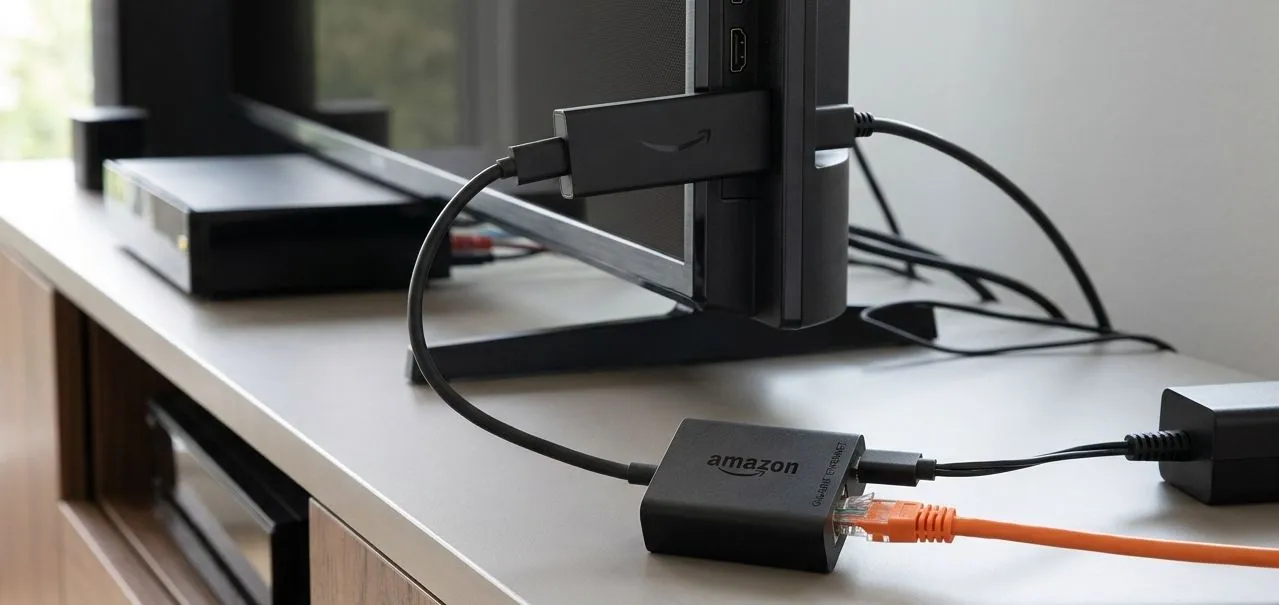
Amazon has released a new Fire TV Ethernet Adapter — and at first glance, it looks like a genuine upgrade. It swaps the decade-old micro-USB connector for USB-C. It gains Gigabit Ethernet capability. And it arrives alongside the new Fire TV Stick HD (2nd Gen), the first Fire TV Stick to ship with a USB-C port.
For Australian IPTV streamers who rely on a wired connection for stable, buffer-free streaming, a Gigabit-capable Ethernet adapter sounds exactly like the upgrade we've been waiting for. But the reality is more complicated — and more frustrating — than the product listing suggests.
In this article, we break down exactly what the new Fire TV Ethernet Adapter delivers, why its Gigabit rating is misleading in practice, what the Vega OS situation means for IPTV users, and whether there are better alternatives for Australian households who want wired streaming without compromise.
Amazon's original Fire TV Ethernet Adapter launched in 2017. It used a micro-USB connector and topped out at 100 Mbps — Fast Ethernet, not Gigabit. For nearly a decade, every wired Fire TV user was capped at 100 Mbps whether they wanted more speed or not.
The 2026 refresh changes the connector and — quietly — the network hardware inside. The new Fire TV Ethernet Adapter uses USB-C and is, based on Amazon's own product listing, capable of Gigabit speeds. Amazon doesn't use the word "Gigabit" anywhere on the product page, but a single spec line gives it away: the adapter lists support for "up to 480 Mbps when used with Fire TV Stick HD (2nd Gen)".
That 480 Mbps figure is the theoretical ceiling of USB 2.0 — not an Ethernet specification. There is no Ethernet standard between 100 Mbps and 1,000 Mbps. The only way an Ethernet adapter can be bottlenecked to 480 Mbps is if it's a Gigabit Ethernet adapter running through a USB 2.0 interface. Amazon simply chose not to market it as such.
Before you add this to your cart, here's what Amazon's product page doesn't make obvious — and why each catch matters for IPTV users in Australia.
The phrase "Gigabit Ethernet adapter" sounds impressive. But the speed you actually see on the Fire TV Stick HD is determined by the weakest link in the chain — and that weak link is the USB 2.0 port inside the device, not the Ethernet adapter hardware itself.
USB 2.0 has a theoretical ceiling of 480 Mbps. Once you factor in USB protocol overhead — which typically consumes 20–30% of available bandwidth — the practical maximum drops to somewhere between 320 Mbps and 380 Mbps in real-world conditions.
For reference, the previous Fire TV Ethernet Adapter with micro-USB topped out at 100 Mbps. So yes, this is a meaningful upgrade over the original. But it is emphatically not Gigabit — and marketing it with an adapter that contains Gigabit hardware while the device feeding it runs USB 2.0 is, at best, forward-planning and, at worst, misleading.
For most Australian home networks, even 350 Mbps of wired throughput is more than enough for IPTV streaming, 4K content, and general use. The issue is not whether the speed is sufficient today — it's whether Amazon future-proofed the device as well as the adapter.
The Fire TV Ethernet Adapter story cannot be told without addressing the device it was designed for: the Fire TV Stick HD (2nd Gen). And the most important thing about that device has nothing to do with ports or speeds — it's the operating system running underneath.
The Fire TV Stick HD (2nd Gen) ships with Amazon's new Vega OS. Unlike previous Fire TV Stick models, which ran a fork of Android that permitted APK sideloading, Vega OS is a completely different platform — and Amazon has officially confirmed that all future Fire TV Sticks will run Vega OS.
What does this mean in practice? It means no APK sideloading. You cannot install TiviMate. You cannot install IPTV Smarters Pro. You cannot install any IPTV player that isn't explicitly approved and listed in the Amazon Appstore. For the vast majority of Australian IPTV subscribers, this is a deal-breaker — full stop.
The Fire TV Ethernet Adapter is technically compatible with older Fire TV devices that still run Android — but those devices use the old micro-USB port, making the new USB-C adapter incompatible. In other words: the new adapter fits the new device, and the new device blocks your IPTV apps. It's a frustrating combination.
Here's exactly what changed and what stayed the same between the 2017 original and the 2026 updated Fire TV Ethernet Adapter.
| Specification | Original (2017) | New (2026) |
|---|---|---|
| Connector Type | Micro-USB | USB-C |
| Ethernet Standard | 100 Mbps (Fast Ethernet) | 1,000 Mbps (Gigabit) |
| Real-World Max Speed | ~95 Mbps | ~350 Mbps (USB 2.0 limited) |
| Compatible Device Port | Micro-USB (USB 2.0) | USB-C (likely USB 2.0 only) |
| Full Gigabit Available? | No | No (USB 2.0 bottleneck) |
| Works With Vega OS Devices? | N/A | Yes — but Vega OS blocks IPTV |
| IPTV Sideloading on Paired Device | Yes (older Fire TV Android) | No (Vega OS only) |
If wired Ethernet and full IPTV sideloading are your priorities, here are the devices that actually deliver — no compromises, no closed operating systems.
The Google TV Streamer is the single best streaming device for Australian IPTV users right now. It has a built-in Ethernet port (no adapter needed), runs open Android-based Google TV, fully supports APK sideloading, and ships with full Gemini AI integration. Available at Google Store Australia.
The Chromecast with Google TV 4K supports APK sideloading and works with any USB-C Gigabit Ethernet adapter. Pair it with a quality USB-C hub with Ethernet for a fully wired setup — no Vega OS restrictions in sight. Available at JB Hi-Fi and Harvey Norman Australia.
Still the gold standard for performance streaming boxes, the NVIDIA Shield TV Pro includes a built-in Gigabit Ethernet port, runs open Android TV, and supports every IPTV player including TiviMate. Overkill for most users, but unmatched for enthusiasts. Available from NVIDIA Australia.
The Fire TV Cube (3rd Gen) runs Android-based Fire OS (not Vega OS), includes a built-in Ethernet port, and supports APK sideloading. It's the last Fire TV device that works properly for IPTV. But Amazon has signalled it will not release new Android-based Fire TV devices going forward — so buy it while it's still available and supported.

The new Fire TV Ethernet Adapter is not inherently bad hardware. A Gigabit-capable USB-C adapter is a legitimate improvement over a decade-old 100 Mbps micro-USB accessory. If you own an older Android-based Fire TV device and somehow have a USB-C adapter but a micro-USB port — well, that's the wrong direction — but the point stands that the adapter hardware itself is the right move.
The problem is context. Amazon has announced, clearly and deliberately, that all future Fire TV Sticks will run Vega OS with no APK sideloading. The new USB-C Ethernet adapter is designed for those Vega OS devices. And Vega OS devices are incompatible with the way the majority of serious Australian IPTV subscribers access their content.
This matters beyond just the Ethernet adapter. It represents a broader strategic shift by Amazon away from the open, developer-friendly Android ecosystem that made Fire TV sticks so popular among IPTV users in the first place. Amazon is building a closed platform — one that funnels users toward Amazon's own content and partnerships.
For Australian IPTV streamers, the message is clear: Google TV is now the go-to open streaming platform. Unlike Amazon's new direction, Google TV devices remain fully open to APK sideloading, third-party IPTV players, and any streaming service you choose to install.
Interested in understanding how Google TV compares as an IPTV platform? Check out our full guide on Gemini on Google TV coming to Australia in 2026 — it covers why Google TV is fast becoming the best streaming platform for IPTV users who want both AI features and full app freedom.
The new Fire TV Ethernet Adapter tells a familiar story: a hardware upgrade undermined by the platform it's built for.
The adapter itself is genuinely better than what came before. USB-C replaces a connector that was already obsolete when the original shipped in 2017. Gigabit Ethernet hardware replaces a 100 Mbps chip. These are real improvements, and if Amazon eventually releases a Fire TV device with a USB 3.x port, the new adapter will be ready to deliver full Gigabit wired performance.
But paired with the Fire TV Stick HD (2nd Gen) — with its USB 2.0 port, its Vega OS, and its confirmed end to APK sideloading — the Fire TV Ethernet Adapter is a capable accessory shackled to a platform that has abandoned the open ecosystem IPTV users depend on.
For Australian IPTV subscribers, the right path forward is clear. Choose a Google TV device — open, wired-capable, fully compatible with every IPTV player, and now equipped with Gemini AI for the biggest smart TV upgrade in years. Pair it with your Australia-IPTV subscription and you have a setup that Amazon's closed ecosystem simply cannot match.
Amazon's Fire TV Ethernet Adapter is not a product to ignore — but it's a product to buy only when the right Fire TV device exists to match it. That device does not exist yet. And given Amazon's current direction with Vega OS, it's not clear it ever will for IPTV users.
Firestick VS Chromecast Brutally Honest 10-Point Comparison Two giants. One winner. We put Firestick vs Chromecast...
#1 IPTV Provider. Australia-IPTV Is Dangerously Good Not all streaming services are built equal....
Save 58% — Australia IPTV subscription : Best Plans Revealed From a casual trial...